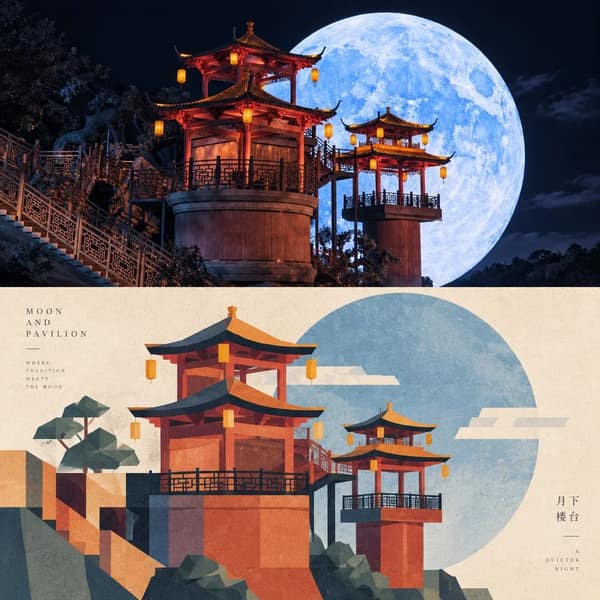
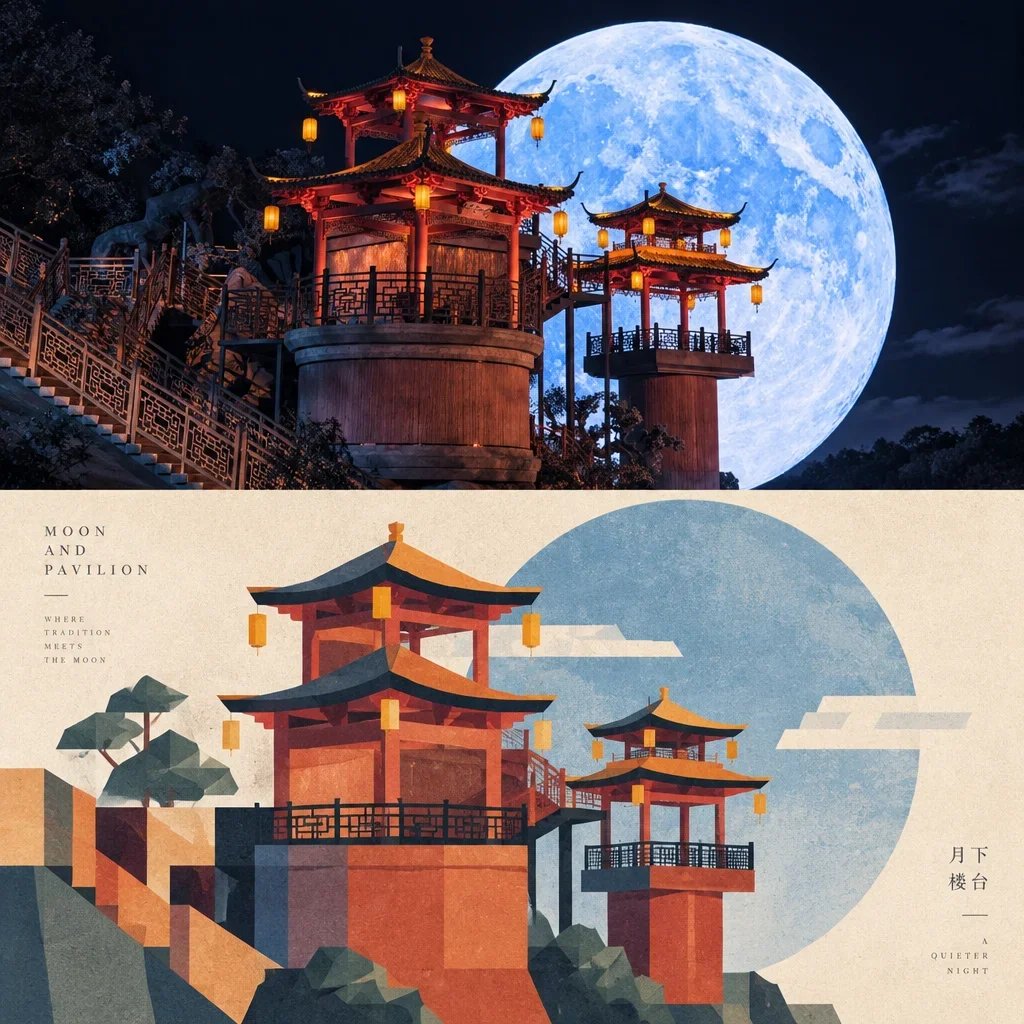
3:4 vertical advanced design poster, single photo as a standalone piece, no multi-image collage. The composition is strictly 1:1 top and bottom, each occupying 50%. The upper half retains the original photo, preserving the subject, structure, pose, realistic texture, natural lighting, and original color atmosphere, with only slight high-end color grading to present the texture of an art magazine or exhibition image. The environment may be naturally extended to fit the format, but the subject must not be stretched, distorted, or altered. The lower half extracts the most recognizable subject, silhouette, structure, pose, and narrative relationships, reconstructing them into blocky, modular geometric deconstructed illustration. It does not replicate incompletely or depict realistically; irrelevant details are removed, retaining only the visual memory points that best represent identity and temperament. The image is rebuilt through geometric summarization, shape overlapping, and collage reassembly, allowing immediate correspondence with the upper photo. The style emphasizes a blocky, modular feel, geometric segmentation, and complete large surfaces. Splitting should not be too fragmented; avoid cutting into numerous small pieces. Instead, organize the subject with fewer, larger, more complete rectangles, squares, rounded squares, ellipses, triangles, and irregular blocks. Human figures may have square faces, clear jawlines, and blocky facial features; architecture is transformed into square volumes, facade divisions, window rhythms, and structural transitions; animals, plants, objects, and landscapes are similarly refined into geometric forms with a blocky order. Moderate exaggeration is allowed, but must be mature, restrained, and concise, avoiding triviality, childishness, and overly scattered composition. Use flat color blocks + collage composition + modernist geometric language. Color blocks are assembled like paper cutouts, creating a distinct yet orderly collage feel; complex backgrounds are removed, leaving only a few necessary shapes without forming a second focal point. The composition maintains a small-scale subject with large areas of negative space, arranged freely according to the subject's direction, proportion, center of gravity, and structural flow. It may be off-center, edge-aligned, or partially cropped, with clear primary-secondary relationships, balanced density, and emphasis on positive-negative space, block weight, and breathing room. The texture is gentle paper grain with a slight printmaking feel; color blocks retain a delicate paper texture, soft noise, and subtle printing texture, approaching paper collage or art print. Avoid smooth vectors, 3D rendering, photo filters, and excessive retouching. The color palette extracts 2–4 most recognizable and temperament-reflecting colors from the upper photo, refined into a more sophisticated system. Colors may be brightened, purified, and desaturated, turning into cream white, apricot, peach pink, coral orange, misty blue, gray-green, sage green, warm brown, soft purple, and other light, modern, and pleasing color blocks. Main colors are vivid but not harsh; secondary colors are gentle and layered, with a clean, warm, stylish, and approachable feel. Avoid earthy yellow, dirty gray, dark brown, fluorescent colors, cheap candy tones, and messy color schemes. Text is minimally introduced, unrestricted by language, and may include short titles, notes, numbers, or descriptions based on the subject's identity, location, emotion, or symbolism. Text should be small, light, and restrained, placed in negative space or corners, forming a refined graphic-text relationship without commercial headline stacking. The overall language is unified by large geometric deconstruction, restrained collage, soft high-end color schemes, paper grain, ample negative space, and editorial layout. Whether depicting people, architecture, animals, plants, objects, or landscapes, maintain clear identity and modular geometric order.